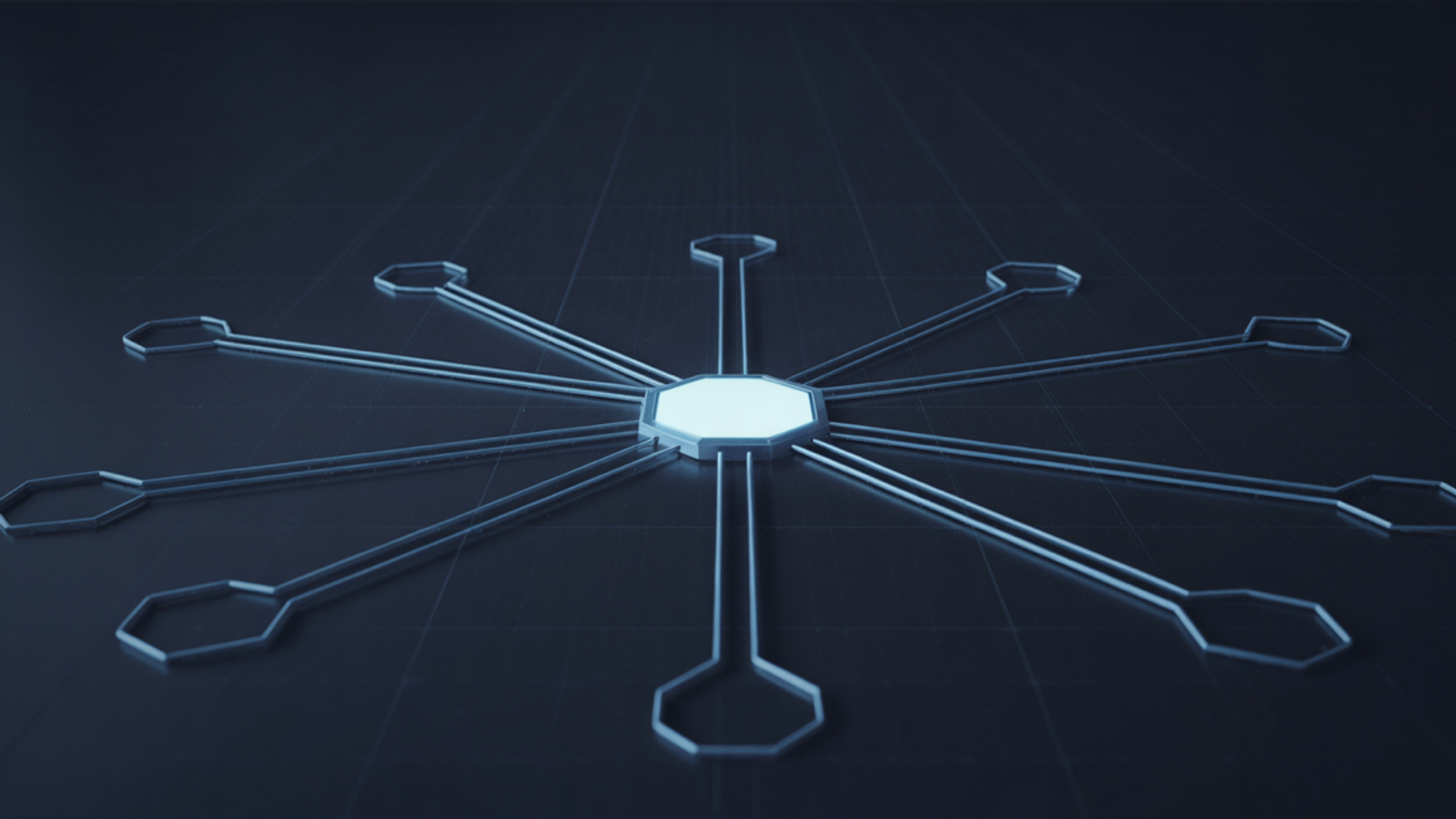
In November 2024, Anthropic released the Model Context Protocol as an open standard for connecting AI systems to external tools and data sources. It had roughly 100,000 installs.
By March 2026, MCP has crossed 97 million installs. OpenAI killed its Assistants API and adopted MCP. Google DeepMind, Microsoft, AWS, and Cloudflare all ship MCP-compatible tooling. In December 2025, Anthropic donated MCP to the Agentic AI Foundation under the Linux Foundation, with OpenAI and Block as co-founders.
That growth rate, from 100,000 to 97 million in 16 months, is not normal for an infrastructure protocol. It reflects something specific: the AI industry needed a standard way for models to interact with the world beyond chat, and MCP is the one that stuck.
MCP is not a product. It is plumbing. And the plumbing determines what AI can actually do in production.
What MCP Actually Does
The distinction matters because it explains why MCP is spreading faster than protocols typically do.
APIs are precise and stable. They define specific endpoints with specific inputs and outputs. When a developer integrates a payment processor, they call a defined endpoint with defined parameters and get a defined response. That works well for deterministic software.
MCP is flexible. Instead of defining specific calls, it exposes capabilities. An MCP server describes what tools are available, what data can be accessed, and what actions can be taken. An AI system connected via MCP can discover those capabilities dynamically and decide which to use based on context. The difference is between "call this endpoint with these parameters" and "here are all the things you can do."
As Practical Ecommerce described it, MCP signals a shift from AI as a chat tool to AI as an operator in a business. An AI system connected to a shipping provider through MCP does not just answer questions about shipping. It can create shipments, compare carrier rates, generate labels, track packages, and validate addresses. The AI moves from analysis to execution.
That shift is why CIO magazine reported that MCP is "suddenly on every executive agenda." It sits at the intersection of AI execution, system integration, and enterprise governance. When AI can act within enterprise systems rather than just analyse enterprise data, the risk equation changes.
Who Is Using It
The production deployments are already live.
Shopify introduced Storefront MCP, a production endpoint that lets AI agents interact with a live store: searching products, managing carts, completing checkouts. Three MCP servers handle different functions: Storefront for product browsing, Customer Accounts for order tracking and returns, and Checkout for the full purchase flow. ChatGPT, Perplexity, and Microsoft Copilot already have live integrations.
Beehiiv integrated MCP to enable AI analysis of subject lines, subscriber growth, churn, and engagement metrics. Shippo built an MCP server that exposes its entire shipping workflow to AI systems: creating shipments, comparing carrier rates, generating labels, tracking packages, and validating addresses.
Each of these integrations follows the same pattern. Instead of building bespoke AI features, the platform exposes its existing capabilities through MCP and lets AI systems use them. The platform does not need to predict every AI use case. It just needs to describe what it can do.
As we covered in our analysis of MCP versus custom agent skills, this approach inverts the traditional integration model. The platform becomes a tool provider. The AI system becomes the orchestrator. The protocol sits in between.
The Commerce Layer
Commerce is where MCP's impact is most tangible, because the use case is concrete: an AI agent that can browse, select, and purchase products on behalf of a user.
Shopify and Google announced the Universal Commerce Protocol on March 3, 2026, a transaction layer built on top of MCP. UCP standardises how AI agents discover products, manage carts, and complete purchases across merchants. It is the commercial layer that turns MCP's general-purpose tool connectivity into a shopping workflow.
OpenAI is building its own version with the Agentic Commerce Protocol, enabling product discovery and transactions within ChatGPT. Pagos launched an MCP server for payments data, giving AI agents direct access to transaction analytics and payment performance metrics.
The protocols are multiplying because the use case is real. When AI agents can complete a transaction from discovery to checkout, the economic incentive for merchants to expose their storefronts through MCP is direct. Every AI platform with MCP integration becomes a potential sales channel.
Gartner predicts that 40 percent of enterprise applications will feature task-specific AI agents by the end of 2026, up from less than 5 percent in 2025. Multi-agent system inquiries surged 1,445 percent from Q1 2024 to Q2 2025. MCP is the connective tissue that makes those agents useful: without a standard way to connect to external systems, each agent is an island.
The Gaps
The adoption is real. So are the problems.
The 2026 MCP roadmap, published by lead maintainer David Soria Parra, identifies four priority areas: transport scalability, agent communication, governance maturation, and enterprise readiness. Streamable HTTP transport unlocked production deployments, but running at scale has surfaced real gaps. Stateful sessions conflict with load balancers. Horizontal scaling requires workarounds. Auth, observability, and configuration portability are all incomplete.
The New Stack reported that the protocol has "real gaps in auth, observability, gateway patterns, and configuration portability." These are not theoretical concerns. They are the engineering problems that emerge when a protocol designed for developer experimentation gets deployed in enterprise production.
Security is the sharper concern. CIO reported that MCP tooling can be over-permissioned. Untrusted MCP servers can enable data leakage or prompt injection. Integrations can be created by anyone experimenting with AI tooling, which means enterprise security teams may not know which MCP connections exist in their environment. Autodesk worked directly with the MCP governance process to address fine-grained authorisation, recognising that the protocol needed to support how large organisations actually manage trust.
Deloitte's Tech Trends 2026 frames the broader tension: 85 percent of companies expect to customise agents to fit unique business needs, but only 21 percent report having a mature model for agent governance. Gartner adds that more than 40 percent of agentic projects may be cancelled due to costs, unclear value, or governance gaps.
The protocol works. The governance around it is trailing. That gap is where the risk lives.
What Comes Next
The competitive landscape is forming fast.
A three-tier ecosystem is emerging: hyperscalers providing compute and base models, enterprise software vendors embedding agents into existing platforms, and agent-native startups building from scratch. Four competing or complementary protocols are jockeying for position: MCP for tool use, Google's A2A for agent-to-agent communication, ACP for agent collaboration, and UCP for commerce transactions. The W3C AI Agent Protocol Community Group is working toward official web standards, with specifications expected in 2026-2027.
MCP has the adoption lead. It also has the governance deficit. The protocol that crossed 97 million installs in 16 months now needs to develop the security, observability, and authorisation frameworks that enterprise deployment demands. That work is underway through the Agentic AI Foundation. Whether it moves fast enough to keep pace with adoption is the open question.
The companies building on MCP today, Shopify, Beehiiv, Shippo, and the hundreds of others shipping MCP servers, are betting that the standard will mature as they scale. They are probably right. But the gap between adoption and governance, between what MCP enables and what organisations can safely control, is the same pattern we see across every layer of the agentic infrastructure stack. The technology arrives first. The guardrails follow.
Sources
- CData: 2026 The Year for Enterprise-Ready MCP Adoption
- MCP Official: 2026 MCP Roadmap
- Practical Ecommerce: MCP Shifts AI from Chat to Work
- CIO: Why Model Context Protocol Is on Every Executive Agenda
- Shopify: AI Commerce at Scale
- Shopify Dev: Storefront MCP
- Gartner: AI Agent Predictions 2026
- Deloitte: Tech Trends 2026 Agentic AI Strategy
- The New Stack: MCP Roadmap 2026
- Autodesk: Making MCP Enterprise-Ready
- Digital Applied: AI Agent Protocol Ecosystem Map 2026
If MCP becomes the default way AI connects to business systems, who governs the connections: the platforms, the protocol foundation, or the enterprises whose data flows through them?
Charlie Major is a Product Development Manager at Mastercard. The views and opinions expressed in Major Matters are his own and do not represent those of Mastercard.